The Battle of Marawi
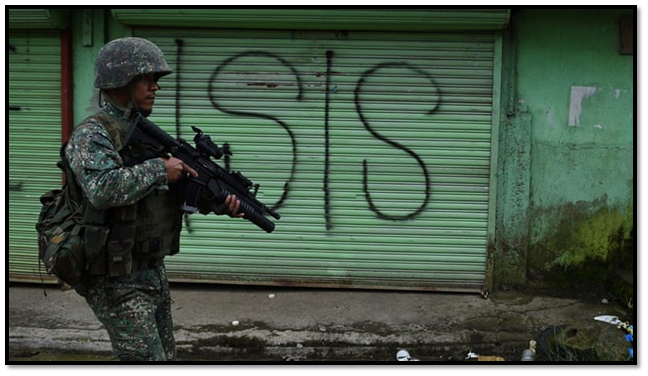
As the Islamic State (IS) was being driven from its stronghold of Mosul in Iraq and Kurdish fighters were preparing to attack its de-facto capital of Raqqa in Syria, many believed that IS had finally been defeated. However, following a botched raid by the Armed Forces of the Philippines (AFP) to capture a wanted terrorist commander in Marawi, armed militants stormed the city. The AFP were driven out while militants burnt buildings, desecrated churches, freed prisoners and raised IS’s black standard more than 8,000km away from where they first declared their caliphate. Despite the Philippine government claiming the battle would be over in days it took five months of hard fighting to recapture the city, leaving over 1,000 dead and Marawi in ruins.
This is not the first instance of Islamic militancy in the country, armed groups have fought Spain, America, and the Philippines for over four centuries. The modern conflict started in the 1970’s with several groups fighting for independence in historically Muslim regions of the majority Christian Philippines. Treaties have been signed with the largest two of these groups, the Moro National Liberation Front (MNLF) and Moro Islamic Liberation Front (MILF), for varying degrees of autonomy. However more radical factions often made up of splinter groups or former fighters from MNLF and MILF continue to fight the government for independence such as the Maute Group, Abu Sayyef, Ansharul Khilafah Philippines (AKP), and Bangsamoro Islamic Freedom Fighters.
Following their declaration of a Caliphate many of these more radical groups fighting the AFP pledged allegiance to IS. The leader of Abu Sayyef Isnilon Hapilon was declared the Emir of Islamic State East Asia (ISEA). A region which encompasses the Philippines, Indonesia, and Malaysia.1. Despite this the Philippine government denied IS had any presence in the country.2. Before pledging allegiance to IS these groups were generally independent from more global Islamic terror organizations, though it is believed Abu Sayyef had links to Al Qaeda.3.
Uniting under the banner of IS these groups began to show greater coordination and ambition. The cell responsible for the Davao city bombings had links to both the Maute Group and AKP, while they recognised Isnilon Hapilon as their overall Emir.4. ISEA groups also undertook bolder attacks including a successful seizure of the town of Butig for a short period in November 2016 by the Maute Group.5. A video found on the phone of a deceased IS fighter during the Marawi battle by the AFP showed leaders from Abu Sayyef and Maute Group planning how to seize the town before the battle. While another video surfaced showing ISEA fighters driving around Marawi before the battle discussing key sites and strategic locations.6. Caches of weapons and supplies have also been hidden throughout the city all clearly showing that the seizure of Marawi had been long planned and prepared for.
On May 23rd Philippines security forces carried out a raid in Marawi with the goal of arresting Isnilon Hapilon.7. However the raid faced tougher than expected resistance from militants, who called for reinforcements and the long-prepared plans to capture the city were put into action. The security forces attempting to capture Hapilon and local forces in Marawi were not prepared for such an assault and quickly retreated. However the attack did not completely succeed with militants failing to seal off all the roads into the city. Furthermore while they forced soldiers back to a military base on the outskirts of Marawi they were unable to capture it. By the end of the day the majority of the city was under ISEA control and martial law was declared across parts of the southern Philippines.
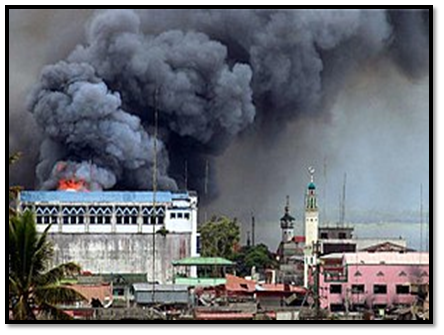
No reason was given by the AFP or the Philippine government for what had happened in Marawi, instead they maintained that the situation was under control and would be resolved shortly. Fighting raged for the following days and within a week they claimed to have recaptured 90% of Marawi including parts of the city centre and two strategic bridges.9. A self-made deadline was set for the city to be recaptured by June 2nd however this quickly passed, the first of many such failed deadlines, and it would be over 3 months before those bridges were actually captured. While parts of western Marawi had indeed been recaptured most of the city was not, the reality was a gruelling urban battle against experienced and zealous militants had only just begun. A battle the AFP were not prepared or trained for. Initial claims had put a few dozen militants in Marawi, though by the end of the battle the AFP would claim 1,000 militants participated including many foreign fighters.10. However no independent number for the amount of IS fighters participating in the battle has been presented.
ISEA resistance was unexpectedly fierce and in response AFP reinforcements flooded into the city, culminating in the first airstrikes against ISEA positions on May 25th. While a much welcome relief for soldiers on the front lines – these would cause significant amounts of damage to Marawi. They were also responsible for several friendly fire incidents, including one on May 31st that killed 11 soldiers.11. A short-lived ceasefire was negotiated by MILF for June 4th allowing more civilians to flee the war-zone, though it quickly broke down as fighting restarted. At this point around 2,000 civilians were estimated to remain in the city, many being used as human shields by militants.12. The Philippine government also came to an agreement with MILF to coordinate humanitarian assistance to people displaced from Marawi.13.
As fighting continued to rage after weeks of clashes, the US announced they were providing technical assistance to the AFP including the use of surveillance planes. While it was later confirmed US forces were present in the city, just not actively fighting.14. An incident on June 16th highlighted the difficulties faced by soldiers in Marawi after they came under attack whilst trying to cross one of the cities bridges. A rocket fired by militants destroyed an armoured vehicle while accurate sniper fire cut into the withdrawing troops. A gruelling 14 hour firefight followed, leading to the death of 13 soldiers and the injury of 40 more.15. Despite such setbacks progress was being made. By mid June 80% of Marawi had reportedly been recaptured, however this is significantly less then previously claimed and likely still an exaggeration.16. At the end of June it was announced that Australia would help in the battle by flying reconnaissance missions over Marawi.17.
July saw more incremental gains made against militants, most notably recapturing the first of several key bridges leading into the heart of Marawi. As the conflict entered August the AFP started making more significant progress, having gotten used to the unfamiliar and difficult urban combat they’d found themselves in. By the end of the month militants had been forced back to 400 buildings in the dense eastern half of the city. However it was only at the end of September that the remaining bridges were recaptured, finally allowing the AFP to start an assault on the militants’ remaining holdouts in the city from all sides.18.
This assault pushed militants back to a final few blocks in central Marawi, though progress was hampered by militants use of human shields and the difficulty of utilizing airstrikes in such close quarter fighting. October 16th saw a major breakthrough, with the key commanders Isnilon Hapilon and Omar Maute being killed. The following day President Duterte declared Marawi had been recaptured, however fighting continued in the final few buildings for another week.19. On October 23rd, exactly 5 months after the city was seized, Marawi was completely retaken and the final black flag of IS was torn down.
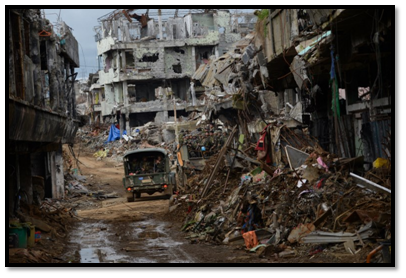
Despite this victory it does not mark the end of the Philippines problems. The battle took a significant toll, over 400,000 people fled their homes while 165 AFP soldiers died and over 1,000 were reportedly injured.20.The Philippine government say 920 militants and 47 civilians were killed in the fighting, though more militants have been killed during clashes in Marawi following the official end of the battle.21. However these numbers have not been independently verified and residents have raised concerns that some of the civilian dead were counted as militants. In fact, over 200 unidentified bodies have been buried as suspected militants while officials estimate 700 more bodies are buried in the rubble.22. No analysis of the destruction in Marawi has been carried out yet, however satellite imagery shows various levels of damage throughout the city. The eastern half of Marawi has suffered extreme amounts of destruction. Entire blocks appear to be flattened while all of the pictures from that half of the city show destruction comparable to Raqqa and Mosul.23.
Although they lost this battle, ISEA militants are by no means a beaten force. They continue to clash with the AFP and MILF, while they have attempted to carry out multiple terror attacks. Marawi also gained them a significant propaganda victory, and signalled to the world just how deadly IS can be even in what are perceived to be weaker branches. So despite much jubilation among soldiers, civilians, and the government alike there must be great caution moving forwards. This battle will plague the Philippines for years, and could be the start of a much more dangerous phase of Islamic militancy in the country. For the Philippine government, this should be a much-belated wake-up call about the continued threat IS poses to the country, for all the innocents that would suffer under future violence, we must hope they heed it.
The Philippine-American War, 1899–1902
After its defeat in the Spanish-American War of 1898, Spain ceded its longstanding colony of the Philippines to the United States in the Treaty of Paris. On February 4, 1899, just two days before the U.S. Senate ratified the treaty, fighting broke out between American forces and Filipino nationalists led by Emilio Aguinaldo who sought independence rather than a change in colonial rulers. The ensuing Philippine-American War lasted three years and resulted in the death of over 4,200 American and over 20,000 Filipino combatants. As many as 200,000 Filipino civilians died from violence, famine, and disease.
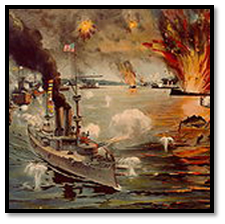
The decision by U.S. policymakers to annex the Philippines was not without domestic controversy. Americans who advocated annexation evinced a variety of motivations: desire for commercial opportunities in Asia, concern that the Filipinos were incapable of self-rule, and fear that if the United States did not take control of the islands, another power (such as Germany or Japan) might do so. Meanwhile, American opposition to U.S. colonial rule of the Philippines came in many forms, ranging from those who thought it morally wrong for the United States to be engaged in colonialism, to those who feared that annexation might eventually permit the non-white Filipinos to have a role in American national government. Others were wholly unconcerned about the moral or racial implications of imperialism and sought only to oppose the policies of President William McKinley’s administration.
After the Spanish-American War, while the American public and politicians debated the annexation question, Filipino revolutionaries under Aguinaldo seized control of most of the Philippines’ main island of Luzon and proclaimed the establishment of the independent Philippine Republic. When it became clear that U.S. forces were intent on imposing American colonial control over the islands, the early clashes between the two sides in 1899 swelled into an all-out war. Americans tended to refer to the ensuing conflict as an “insurrection” rather than acknowledge the Filipinos’ contention that they were fighting to ward off a foreign invader.
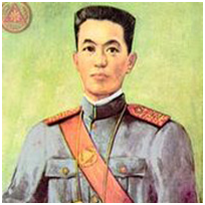
There were two phases to the Philippine-American War. The first phase, from February to November of 1899, was dominated by Aguinaldo’s ill-fated attempts to fight a conventional war against the better-trained and equipped American troops. The second phase was marked by the Filipinos’ shift to guerrilla-style warfare. It began in November of 1899, lasted through the capture of Aguinaldo in 1901 and into the spring of 1902, by which time most organized Filipino resistance had dissipated. President Theodore Roosevelt proclaimed a general amnesty and declared the conflict over on July 4, 1902, although minor uprisings and insurrections against American rule periodically occurred in the years that followed.
The United States entered the conflict with undeniable military advantages that included a trained fighting force, a steady supply of military equipment, and control of the archipelago’s waterways. Meanwhile, the Filipino forces were hampered by their inability to gain any kind of outside support for their cause, chronic shortages of weapons and ammunition, and complications produced by the Philippines’ geographic complexity. Under these conditions, Aguinaldo’s attempt to fight a conventional war in the first few months of the conflict proved to be a fatal mistake; the Filipino Army suffered severe losses in men and material before switching to the guerrilla tactics that might have been more effective if employed from the beginning of the conflict.
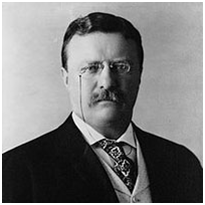
The war was brutal on both sides. U.S. forces at times burned villages, implemented civilian reconcentration policies, and employed torture on suspected guerrillas, while Filipino fighters also tortured captured soldiers and terrorized civilians who cooperated with American forces. Many civilians died during the conflict as a result of the fighting, cholera and malaria epidemics, and food shortages caused by several agricultural catastrophes.
Even as the fighting went on, the colonial government that the United States established in the Philippines in 1900 under future President William Howard Taft launched a pacification campaign that became known as the “policy of attraction.” Designed to win over key elites and other Filipinos who did not embrace Aguinaldo’s plans for the Philippines, this policy permitted a significant degree of self-government, introduced social reforms, and implemented plans for economic development. Over time, this program gained important Filipino adherents and undermined the revolutionaries’ popular appeal, which significantly aided the United States’ military effort to win the war.
In 1907, the Philippines convened its first elected assembly, and in 1916, the Jones Act promised the nation eventual independence. The archipelago became an autonomous commonwealth in 1935, and the U.S. granted independence in 1946.
Great Iraqi Evolution: War between Iraq and United Kingdom
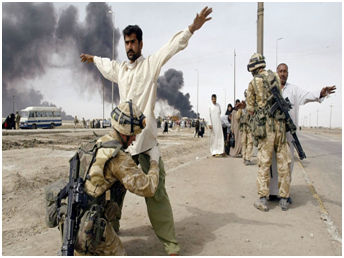
The Iraqi revolt against the British, also known as the 1920 Iraqi Revolt or Great Iraqi Revolution, started in Baghdad in the summer of 1920 with mass demonstrations by Iraqis, including protests by embittered officers from the old Ottoman army, against the British occupation of Iraq. The revolt gained momentum when it spread to the largely tribal Shia regions of the middle and lower Euphrates. Sheikh Mehdi Al-Khalissi was a prominent Shia leader of the revolt.
Sunni and Shia religious communities cooperated during the revolution as well as tribal communities, the urban masses, and many Iraqi officers in Syria.The objectives of the revolution were independence from British rule and creation of an Arab government. Though the revolt achieved some initial success, by the end of October 1920, the British had crushed the revolt. Although the revolt was largely over by the end of 1920, elements of it dragged on until 1922.
During the 1920 revolt, another anti-British rebellion took place in the north Iraq by the Kurds, who were trying to gain independence. One of the major Kurdish leaders of the Kurdish revolt was Sheikh Mahmoud Barzanji.
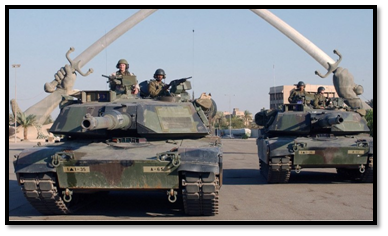
Discontent with British rule materialized in May 1920 with the outbreak of mass meetings and demonstrations in Baghdad. The start of the revolution was centered on peaceful protests against British rule. There were large gatherings at Sunni and Shia mosques which gave proof of co-operation between the two main sects of Iraqi society. At one of the larger meetings 15 representatives were nominated to present the case for Iraqi independence to the British officials. Acting Civil Commissioner, Arnold Wilson, dismissed their demands as impractical.
Armed revolt broke out in late June 1920. Ayatollah al-Shirazi issued another fatwa which read, “It is the duty of the Iraqis to demand their rights. In demanding them they should maintain peace and order. But if the English prevent them obtaining their rights it is permitted to make use of defensive force.” [13] This seemed to encourage armed revolt. The British authorities hoped to avoid this and they arrested a sheikh of the Zawalim tribe. Later an armed band of loyal tribal warriors stormed the prison and set him free. The revolt soon gained momentum as the British garrisons in the mid-Euphrates region were weak and the armed tribes much stronger. By late July, the armed tribal rebels controlled most of the mid-Euphrates region. The success of the tribes caused the revolt to spread to the lower Euphrates and all around Baghdad.
The British War Secretary, Winston Churchill, authorized immediate reinforcements from Iran that included two squadrons of the Royal Air Force. The use of aircraft shifted the advantage to the British and played a huge role in ending the revolt. There were also tribes that worked against the revolt since they were recognized by the British authorities and profited from this acknowledgement. Eventually the rebels began to run low on supplies and funding and could not support the revolt for much longer while British forces were becoming more effective. The revolt ended in October 1920 when the rebels surrendered Najaf and Karbala to the British authorities.
World War II
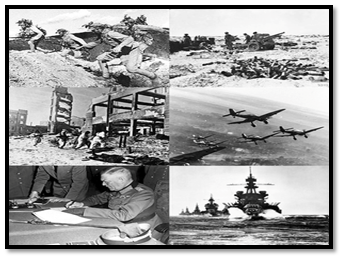
The Cold War was a long period of tension between the democracies of the Western World and the communist countries of Eastern Europe. The west was led by the United States and Eastern Europe was led by the Soviet Union. These two countries became known as superpowers. Although the two superpowers never officially declared war on each other, they fought indirectly in proxy wars, the arms race, and the space race.
Time Period (1945 – 1991), the Cold War began not too long after World War II ended in 1945. Although, the Soviet Union was an important member of the Allied Powers, there was great distrust between the Soviet Union and the rest of the Allies. The Allies were concerned with the brutal leadership of Joseph Stalin as well as the spread of communism.
The Cold War came to an end with the collapse of the Soviet Union in 1991.
Proxy Wars; The Cold War was often fought between the superpowers of the United States and the Soviet Union in something called a proxy war. These were wars fought between other countries, but with each side getting support from a different superpower. Examples of proxy wars include the Korean War, the Vietnam War, the Yom Kippur War, and the Soviet Afghanistan War.
Arms Race and Space Race; The United States and the Soviet Union also tried to fight the Cold War by demonstrating their power and technology. One example of this was the Arms Race where each side tried to have the best weapons and the most nuclear bombs. The idea was that a large stockpile of weapons would deter the other side from ever attacking. Another example was the Space Race, where each side tried to show that it had the better scientists and technology by accomplishing certain space missions first.
Deng Xiaoping’s Long War: The Military Conflict between China and Vietnam, 1979-1991 (The New Cold War History)
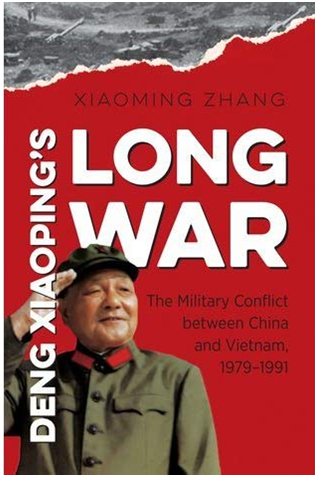
In mid-February 1979, the world was shocked when military forces from the People’s Republic of China (PRC) suddenly invaded the Socialist Republic of Vietnam (SRV). To many outsiders, the two nations seemed firm allies, and the invasion was all the more surprising because, in the words of the Chinese leadership in Beijing, the PRC had gone to war to “teach Vietnam a lesson” it would not soon forget. For the next twenty-nine days, China’s People’s Liberation Army (PLA) fought fiercely against Vietnam’s army and militia.
The Roots of the Sino-Vietnamese Conflict
Shared causes and conflicts hardly render nations and peoples immune from rivalries and differences that can lead to subsequent discord. In 1754, American colonists joined in common cause with the forces of the British Empire, fighting steadfastly over the next nine years against the French and their allies. But by 1776, the pronounced differences between those colonists and their ostensible mother country erupted into an open revolt in which the American revolutionaries triumphed in no small measure thanks to the assistance of the same French they had so recently fought.
Deng Xiaoping and China’s War Decision
In late fall of 1978, the spotlight in Beijing was Deng Xiaoping’s reascendance and the Chinese leadership’s adoption of economic reform as the highest national priority. During that same period, at the headquarters of the General Staff, PLA officers were considering the use of force to resolve border disputes with Vietnam as the relationship between Beijing and Hanoi continued to deteriorate. Their subsequent proposal evolved into a dreadful decision to launch a large-scale invasion of Vietnam in early 1979.
Planning and Preparation for the Invasion
On 9 December 1978, both the Guangzhou and Kunming Military Regions received orders to deploy troops on the Vietnamese border by 10 January and prepare to fight a war “in limited time and space” with “overwhelming force.” Many Chinese soldiers doubted whether China should attack Vietnam and whether they would be victorious. The PLA forces had not fought a major war in almost thirty years. Thus, no officers at or below the battalion level had any combat experience. Moreover, the Cultural Revolution had left the PLA’s morale and reputation at all-time lows.
Bloodshed over Vietnam’s Northern Border Region
China’s 1979 invasion of Vietnam can be divided into three phases. During the first phase (17–25 February), Chinese forces broke through the Vietnamese first line of resistance and captured the provincial capitals of Cao Bang and Lao Cai and a key border town, Dong Dang, the gateway to Lang Son. The second phase (26 February–5 March), consisted of a full-scale Chinese assault on Lang Son in the east and additional military engagements in the areas of Sa Pa and Phong Tho in northwestern Vietnam.
Reassessing the 1979 War
The classic Sun Tzu adage of war, “Know the enemy and know yourself,” writ large, is a fundamental tenet of Chinese military strategy. The PLA always maintained an active self-evaluation program to be fully aware of its strengths and weaknesses. Deng Xiaoping reckoned that the invasion of Vietnam was a remarkable experience for the PLA since so many troops endured the combat test. Shortly after military operations ended, he ordered all troops involved in the conflict to write summaries of their combat experience as their primary job.
A Decadelong Continued Border Conflict, 1980–1990
The withdrawal of Chinese troops from Vietnam did not bring an end to hostilities between the two countries; instead, military confrontation continued as the Chinese and Vietnamese regular forces competed for control of mountainous positions along the border, with attacks and counterattacks throughout the 1980s. The conflict peaked in 1984 with both sides sending a significant number of troops into battles over hills in the Laoshan area (in the Vi Xuyen District of Vietnam).
In the Shadow of the Border Conflict
The history of China in the 1980s is commonly reduced to simply a discussion of Deng Xiaoping’s reform movement and his policy of opening China to the West. Journalists, diplomatic observers, and historians alike have concentrated on these two themes and their related political and social developments. Consequently, not enough attention has been paid to the border conflict with Vietnam and particularly to its impact on the home front within the PRC, its influence on China’s military modernization, and its lasting cultural legacy.
The Road to Conflict Termination
China’s decision to use military force to counter Vietnam’s “hegemony” was largely based on the Chinese leadership’s calculation of a serious evolving Soviet threat to its geopolitical interests. Vietnam’s invasion of Cambodia was regarded as a key component of a broader Soviet scheme to encircle China. Such concerns continued to drive China’s hostile policy toward Vietnam after 1979.
Although Beijing ended its invasion of Vietnam the same year that it began, China became bogged down in an enervating border conflict for more than a decade, mainly as a consequence of Vietnam’s continuing occupation of Cambodia.
Prepared By: Group 1 (11-ABM)
- Jade Alar Tubog
- Michelle Tuban Belache
- Jennifer Ocon
- Jay-ann Delfino
- Glenmae Teves
- Jinky Tubio
- Angelin Labao
- Jun Viedel Alejado
Subject Teacher: Mrs. Janet C. Magahin













 Group 4 Etech